Example #3
Lorem Ipsum is simply dummy text of the printing and typesetting industry. Lorem Ipsum has been
Legacy access control systems require months of planning, dedicated networking to every door, and capital investment before a single lock goes live.
Bitwards removes all of that. A locksmith changes your locks — choose from a number of participating OEMs. The platform registers them. Users access through mobile phones.
Your building is digital — door by door, at your own pace, starting now.
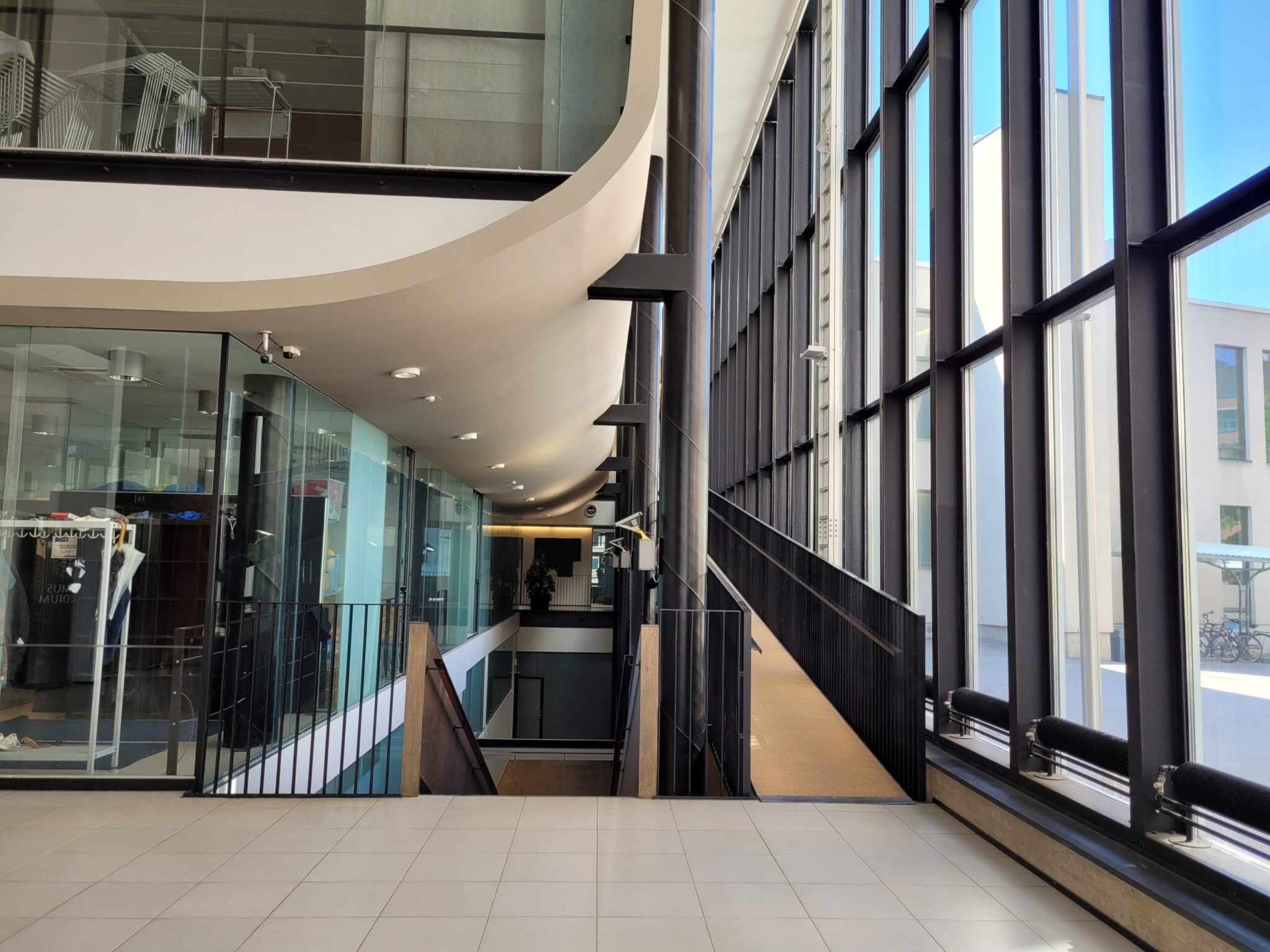
13,000 doors across a university. Constant churn. Legacy wiring can’t keep up.
Bitwards Unwired Access can.
Explore for education →
Multi-tenant buildings need a peace treaty between owners and occupants. Logical separation lets you define the boundary while tenants manage their own access — no fobs, no friction, no surveillance.
Explore for property →
Proprietary silos are why 97% of the market is still stuck with physical keys. Embed Bitwards Unwired Access and turn your digital lock into a Hub of Trust — no platform dead-end, just scale.
Explore for OEMs →
Most systems (Access Control 2.0) are just digitized fobs on top of a local network architecture (wired or wireless) —they still require wired controllers and central “brains.” Bitwards is Unwired Access: a zero-infrastructure, software-defined architecture where the user’s phone is the infrastructure.
When legacy vendors claim to be “digital,” they are usually just swapping a physical key for a proprietary plastic fob, keeping you trapped in the same rigid hardware silos.
Unlike locks that require local hubs, Bitwards ‘Unwired’ uses the phone as the gateway, cutting out the need for on-site hardware.
“Wireless” is often marketing lingo for a system that is mobile on the front end but tethered to local hardware on the back end.
We mean it’s an ordinary digital lock with standard Bluetooth/ NFC, and the Bitwards Library in its firmware (which can be integrated with any lock OEM). The lock requires no network. The phone carries a certified, time-bound token that the door validates locally. The user’s mobile phone provides the network functionality. The lock returns the token with its status information, eg battery level, etc. The user’s phone will return that token to the cloud, and to the lock administrator.
Picture a lock on a gate on a forest road. That lock has every access control feature that a fully wired lock has.
In Finland, architectural design is about functional essentialism—a system should have the fewest possible parts, and it must serve your organizational rules rather than dictate them.
Legacy access control industry outlook is that without a wired controller or central “brain” in each building, the system is essentially “offline” or “dead” when it comes to real-time functionality. With this thinking there would never be StarLink, and we would still be carrying cash.
Bitwards’ mobile-industry outlook leverages the phone’s processing intelligence, transforming the lock into an intelligent terminal that serves your organizational logic rather than forcing you to serve the hardware.
We’ve been heads-down scaling the technology at Finland’s largest university—13,000 users — and several hundred other customers. We are now in our “Apple Pay moment,” scaling through major telecom and OEM partnerships across Europe.
The legacy industry has been shouting about fobs for 20 years. We’ve been building Unwired Access to replace them.
While the legacy industry has digitized the physical key into a plastic fob, they are trapped by a hardware-dependent model – this is how they make money.
The legacy industry is missing the shift to software-defined access where the smartphone becomes the infrastructure, opening the other 97% of the market.
Because legacy “wired” architectures cost upwards of €2,000 per door. They are built solely for the few “battleship” entrances, leaving the remaining 97% of your asset as analog dead weight. Bitwards uses the smartphone as the infrastructure layer to make digitizing every single door, cabinet, and utility economically inevitable.
When a legacy vendor tells you a door “doesn’t need” digital access, what they actually mean is that their system is too expensive and rigid to justify putting it there.
Through logical separation. The owner defines the boundary, but the tenant manages the identity. It is a peace treaty built into the architecture that respects the privacy line between building safety and individual privacy.
Most “keyless” systems are designed for total surveillance; we are designed for sovereign access.
Universities don’t have static populations—they have semester turnover, visiting researchers, temporary contractors, and event guests, often numbering in the tens of thousands.
If your facilities team is still spending the first two weeks of every semester handing out plastic cards and the last two weeks trying to collect them, that’s not an operations problem—it’s an architecture problem.
Yes. Because the phone is the infrastructure, each building doesn’t need its own network connection to participate in the access system. The phone carries certified, time-bound tokens that the lock validates locally. Audit data is carried back to the cloud by the next connected phone. You manage the entire estate from a single platform—whether the building has gigabit ethernet or no network at all.
Legacy vendors will tell you each building needs its own controller and site network. What they really mean is: each building needs another €50,000 in hardware before a single door goes digital.
Through logical separation – configured in a few stroked by the administrator on the Bitwards Platform.
Legacy “master” systems force a choice: either the central office controls everything (and departments resent the bottleneck), or departments run their own silos (and central loses oversight). We eliminate that choice.
No. Bitwards is an architectural bridge. Bitwards Unwired Access coexists with your existing infrastructure—extending modern delegation, remote management, and software-defined permissions to your current card readers and digital locks at virtually no additional cost.
For new buildings or expansions, you deploy Bitwards Unwired Access with zero legacy hardware. Over time, the old infrastructure phases out naturally. No rip-and-replace. No capital shock.
The vendors who sold you the original hardware want you to believe that the only upgrade path is buying more of their hardware. We exist to prove that’s not true.
Emergency protocols are handled at the policy layer, not the device layer. Lockdown or evacuation commands propagate through the Bitwards Unwired Access to every enrolled user.
A wired system’s emergency response is only as reliable as the network that connects it. If the emergency is the reason the network went down, you have a problem. Our emergency logic lives at the edge—where it matters.
Nothing. You gain security and resilience. Traditional systems are centralized “battleships” that fail if one wire is cut. Bitwards uses cost asymmetry: we move the intelligence to the phone using the same certified security protocols as mobile payments.
Total automation of the “many-to-many” bottleneck. Our Tenant Access Manager allows you to define the resource while delegating user management to the tenant. It removes the administrative burden while maintaining policy control.
Legacy “keyless” systems actually increase your admin work by forcing you to manage thousands of physical fobs; we eliminate the middleman entirely.
The building keeps moving. Because validation happens locally at the edge—the door and the phone—access remains functional even in fragmented or completely offline environments.
A wired “keyless” system becomes a paperweight the moment the router blinks; an unwired system doesn’t even notice.
Not at all. Bitwards is an architectural bridge. We act as the operating system for any digital lock, adding the modern “many-to-many” permission layer and remote delegation capabilities that legacy systems lack.
We take your existing “digital keys” and finally make them part of a truly unwired, software-defined ecosystem.
Through remote delegation. From the Tenant Access Manager, you define the resources the tenant can access—main entrance, floor, parking—and delegate user management to the tenant’s own administrator.
The tenant then enrols their own people via the app. No one needs to visit the building, hand over physical fobs, or program a reader on-site. Day one access is configured in minutes, from anywhere.
In the legacy world, “tenant onboarding” means scheduling a site visit, programming fobs, and hoping the installer shows up on time. In ours, it means sending a link.
Yes—that’s the point of delegation depth. The tenant administrator can issue time-bound access rights to visitors, cleaners, maintenance crews, and subcontractors without involving the building owner’s team. The owner never loses policy control—they set the boundaries. But the day-to-day permission flow is entirely the tenant’s responsibility.
Every time a tenant calls your office to request a visitor fob, that’s a failure of architecture—not a reasonable workflow. We remove the call entirely.
Shared amenities are the hardest use case for legacy systems because they require “many-to-many” permissions—multiple tenants accessing the same resources on overlapping schedules. The Access OS handles this natively. The building owner defines the shared resource and its availability rules. Each tenant manages their own users’ access to those shared spaces through the same delegation model. No fob swaps, no scheduling conflicts, no manual overrides.
Legacy systems handle shared spaces by issuing master fobs or duplicating permissions manually. The result is an administrative nightmare that gets worse with every new tenant. We solve it structurally, not administratively.
By unwiring their business. Instead of billing for manual labor like pulling copper or mounting €2,000 controllers, integrators shift to high-margin Access-as-a-Service models.
The old “keyless” model makes you a high-priced electrician; the new model makes you a software-defined infrastructure partner.
You sell the outcome, not the cable. The shift from hardware installation to Access-as-a-Service means you become the long-term infrastructure partner, not the one-time electrician. You design the access architecture, configure the Tenant Access Manager, onboard building owners, and provide ongoing managed services. Your margins go up because you’re selling recurring software value instead of one-time labor. And you stop competing with the next integrator who can pull copper for €5 less per metre.
The wiring business is a race to the bottom where hardware vendors take the margin and you take the risk. The Bitwards Unwired Access is a race to recurring revenue where you own the customer relationship.
A traditional quote is project-based: €2,000+ per door for hardware, wiring, controllers, and labor. It’s a large upfront capital expenditure for the customer and a one-time revenue event for you. An Access-as-a-Service model flips this: a low or zero upfront cost per door, with a monthly per-door or per-user subscription. The customer gets lower risk and immediate deployment. You get predictable, recurring revenue with higher lifetime value per account.
Legacy install quotes look impressive on paper but they’re feast-or-famine. One project ends, you hunt for the next. A recurring model means your January revenue already exists before January starts.
Yes. The Access OS is designed as an infrastructure layer—the rails—while your brand delivers the experience and the trust. Solution providers like Selepso in France operate on exactly this model: their customers see the partner’s brand, backed by Bitwards’ protocol and architecture. You maintain the client relationship. We provide the technology.
Most legacy vendors force you to sell their brand, their hardware, and their roadmap. We let you sell yours.
You don’t pitch replacement—you pitch extension. Bitwards is an architectural bridge that layers modern, software-defined delegation over their existing hardware investment. Their wired controllers keep working. Their card readers keep working. But now they also get remote management, tenant delegation, and the ability to digitize the 97% of doors that the wired system was too expensive to reach. The customer protects their investment while gaining the capabilities they actually need.
The customer’s fear is that they wasted money. Your job is to show them they didn’t—they just built the foundation that you’re now going to extend into a software-defined building.
The deployment model is fundamentally simpler than legacy systems—no controllers to mount, no wiring to run, no on-site network to configure. Your team needs familiarity with the Access OS management platform and the physical lock installation (which varies by OEM hardware). We provide onboarding, technical documentation, and partner certification. Most integrators are deployment-ready within days, not months.
Legacy systems require specialist electricians, network engineers, and weeks of on-site commissioning. We require someone who can install a lock and configure an app.
Proprietary silos are why 97% of the market is still stuck with physical keys. Embedding our Access OS allows OEMs to stop selling “smart” steel and start selling terminals for a global infrastructure.
Legacy access control is a hardware business disguised as a security solution; their goal is to lock you into proprietary readers and controllers forever. Bitwards is completely hardware-independent—the Access OS sits above the physical layer. Mix, match, and upgrade locks from any manufacturer.
It means integrating our secure communication protocol into your lock firmware. We provide the SDK and technical specifications. Your engineering team builds the bridge between your hardware and our software layer—the same way a payment terminal integrates with a payment network. Your lock becomes a terminal on the Access OS, capable of receiving certified, time-bound tokens from any enrolled smartphone. The integration is firmware-level, not bolt-on.
No. The Access OS is explicitly designed as an infrastructure layer, not a customer-facing brand. You maintain your brand, your sales channel, and your customer relationship. We operate underneath—providing the protocol, the delegation engine, and the cloud infrastructure. Think of it as the Stripe model: Stripe powers the payment, but the customer sees the merchant.
Proprietary platforms create geographic and commercial silos. Your locks only work with your readers, your controllers, and your software—which means every new market requires you to build and support the full stack locally. By embedding the Access OS, your lock becomes part of a global, hardware-agnostic infrastructure. Solution providers, integrators, and property managers in any market can adopt your hardware because it speaks a universal protocol. You scale through the ecosystem, not in spite of it.
It disappears—and it’s going to disappear whether you partner with us or not. Apple Wallet, Google Wallet, and telecom-based credentials are making physical fobs obsolete on the same trajectory that contactless payments made cash registers obsolete. The question isn’t whether your fob revenue survives; it’s what replaces it. By embedding the Access OS, you transition from selling consumable plastic to earning recurring revenue on software-defined access—a larger, stickier, and more scalable revenue stream than fobs ever were.
Lorem Ipsum is simply dummy text of the printing and typesetting industry. Lorem Ipsum has been
Lorem Ipsum is simply dummy text of the printing and typesetting industry. Lorem Ipsum has been
Lorem Ipsum is simply dummy text of the printing and typesetting industry. Lorem Ipsum has been